URBAN & INFRASTRUCTURE APPLICATIONS – SMART CITY SOLUTIONS
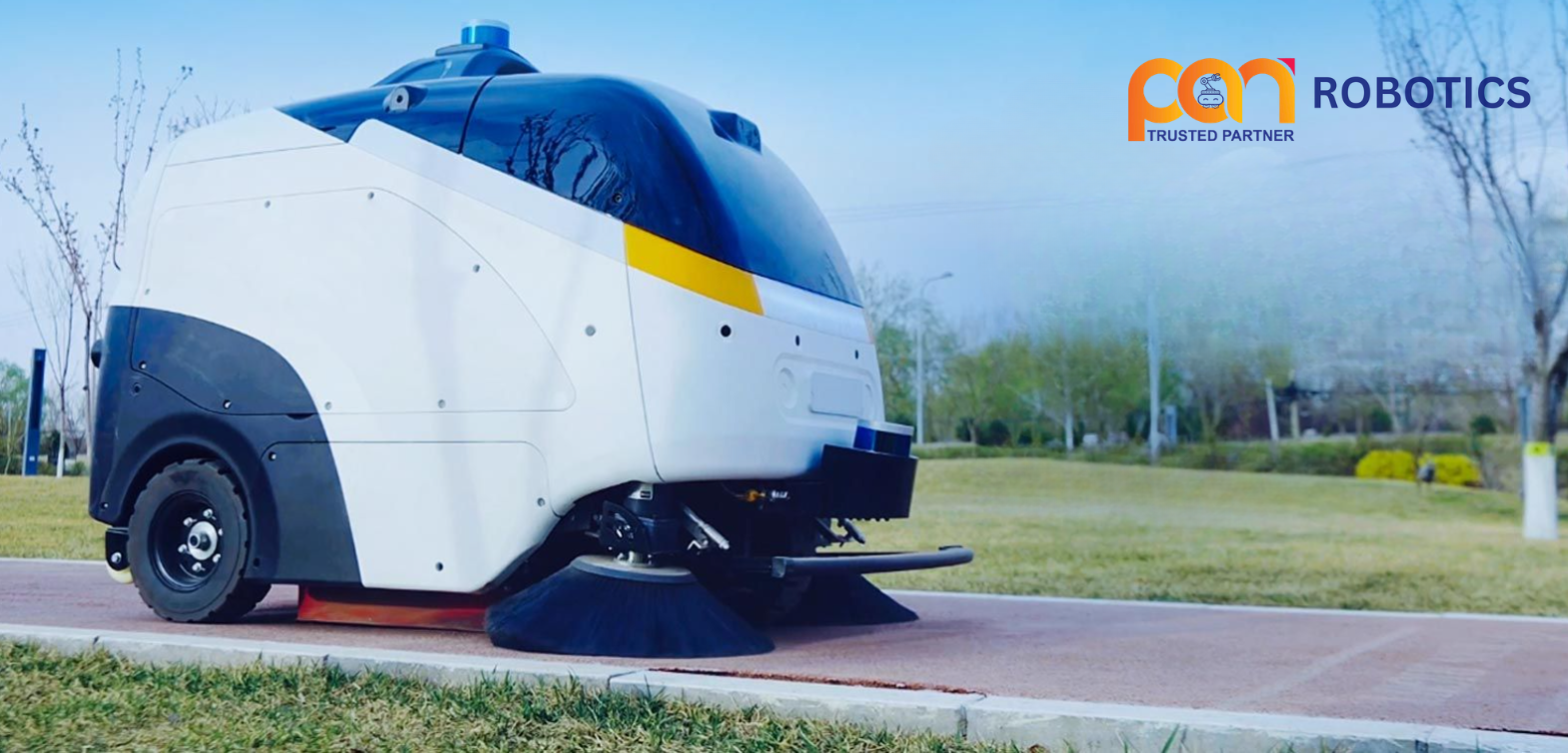
As cities continue to expand and operational demands increase, maintaining cleanliness and managing infrastructure is no longer a simple manual task. Large areas such as public squares, pedestrian streets, industrial zones, and airports require a system that operates continuously, accurately, and cost-effectively.
This is where autonomous robots – capable of navigating and operating without direct human control – combined with
AI (Artificial Intelligence – enabling perception and decision-making),
IoT (Internet of Things – allowing devices to connect and exchange data),
and Big Data (large-scale data storage and analytics systems)
become the core foundation of Smart City models.
Automation trends in urban & infrastructure management
1. Large-scale environmental cleaning
Traditional manual cleaning methods are becoming less effective in large-scale environments ranging from 5,000 to 50,000 m², such as public squares, urban areas, and industrial parks.
Autonomous cleaning robots function as “digital workers,” operating 24/7, handling waste as it appears, and maintaining consistent cleanliness—something manual labor alone cannot sustain over time.
2. Security monitoring & infrastructure inspection
Beyond cleaning, robots equipped with AI cameras and multi-layer sensor systems can:
- Detect unusual activities in public spaces
- Monitor infrastructure conditions (cracks, damages)
- Support surveillance in residential areas, parks, and urban zones
3. Operational optimization for airports & metro systems
In high-traffic environments such as airports and metro stations, autonomous robots help:
- Clean runways and technical zones
- Maintain high-frequency cleaning in waiting areas
- Reduce risks caused by foreign object debris (FOD)
At the same time, they enhance the image of modern infrastructure for international visitors and investors.
4. Connected ecosystem (IoT & Big Data)
Each robot acts as a data point within the urban ecosystem. Through cloud connectivity, managers can:
- Track location and performance in real time
- Analyze waste patterns by area
- Optimize operational schedules
Key benefits of autonomous robot deployment
Accurate and safe operations
Using LiDAR and SLAM technologies, robots can detect obstacles, pedestrians, and vehicles with high precision, ensuring safe operation in dynamic public environments.
Long-term cost optimization
Reduce labor costs, minimize operational risks, and optimize cleaning costs per square meter.
Enhanced urban image
The presence of autonomous technology reflects a modern, forward-thinking city, helping attract investment and increase infrastructure value.
Rapid response in large-scale situations
After large events or unexpected situations, robots can quickly handle large volumes of waste, restoring normal operations in a short time.
PAN Robotics solution
At PAN Robotics, outdoor autonomous robots are not just cleaning devices—they are part of a smart urban management ecosystem.
- Operate independently
- Connected to a central management system
- Provide real-time operational data
This enables managers not only to maintain cleanliness, but also to optimize how cities operate on a daily basis through data-driven insights.
Towards sustainable urban operations
The adoption of robotics in urban management is not a short-term trend, but an essential step toward building modern, livable cities—where technology supports efficient, stable, and sustainable operations.
Contact for consultation
Contact PAN Robotics to explore and experience autonomous robot solutions tailored to your urban, industrial, or infrastructure needs.