In a warehouse, there’s a kind of fatigue that doesn’t come from heavy workloads, but from doing the same thing over and over again, day after day, without anything ever changing.
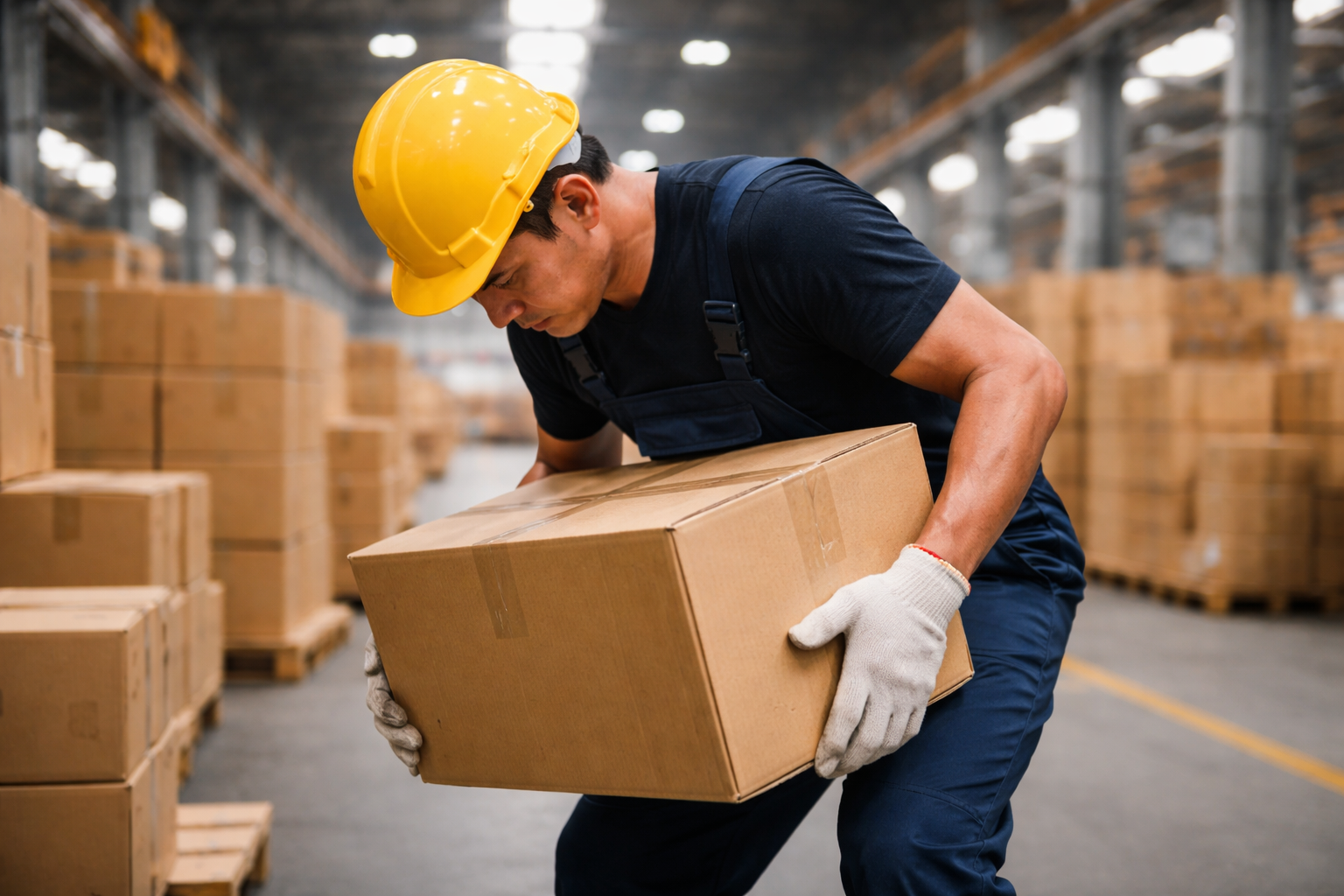
He works there. The job itself isn’t complicated: incoming goods are lifted, outgoing goods are placed. Shift after shift, the cycle repeats. No one calls it “strategic,” yet if he’s absent for just one day, the entire operation starts to slow down. Everything still runs, but not as smoothly as before.
People often say, “Anyone can do this job.” And because of that, no one really notices that the entire system is being held together by the endurance of one person. Ten years pass. The process stays the same. Only the body wears down.
When operations start to change from within
.png)
Then one day, the warehouse stops hiring additional workers. No one is laid off either. It’s just that the parts of the process that used to rely on people to carry, push, and strain begin to move in a different way.
Goods still move. But they no longer need someone standing there to make it happen.
The change doesn’t come overnight. It happens gradually, piece by piece, until one day, the familiar pressure that used to define the job simply isn’t there anymore.
He is still there. But for the first time in years, he is no longer chasing the pace of the operation. Not because there is less work, but because the way of working has changed.
What gets replaced is not the worker
.png)
To be precise, robots do not replace people. They replace outdated ways of working — where everything depends entirely on human effort.
Before, warehouse operations had to rely on unpredictable factors: who feels strong today, who is tired, where to find extra hands when demand spikes. These issues don’t break the system immediately, but over time, they quietly drain time, accuracy, and profit.
When repetitive and physically demanding tasks are transferred to a system, operations are no longer tied to the condition of individuals in each shift.
The worker doesn’t lose his job. He simply no longer has to rely on physical strength to keep everything running.
Panrobotics: Not about robots, but about operations
Many assume that introducing robots solves the problem. But if the underlying process remains unchanged, the bottleneck stays — it simply shifts from people to machines.
Panrobotics does not start with equipment. It starts by looking at the entire operation: where it slows down, and where costs are being lost every day.
From there, workflows are redesigned, repetitive steps are standardized, and automation is applied only where it truly makes sense.
Robots execute. The real transformation lies in how the system is structured.
Work continues. People are still there. But at some point, the system no longer depends on anyone having to push through just to keep it running.
About Panrobotics
Warehouse automation and robotic transport solutions are currently being implemented by Panrobotics across various operational models in Vietnam — from factories and logistics hubs to distribution centers that require stability and scalability.
If your operation feels heavier over time — more people, but not more efficiency — it may be a sign that the system itself needs to be redesigned.
PAN TRADING JSC
142 B2 Street, Sala Urban Area,
An Khanh Ward, Ho Chi Minh City, Vietnam
📞 Hotline: (84-28) 3840 2222 - 0919 302 879
🌐 Website: panrobotics.vn
📩 Email: contact@pantrading.vn