Warehouse automation is becoming an essential trend in modern logistics. It enables businesses to improve operational efficiency, reduce errors, increase productivity, and optimize costs.
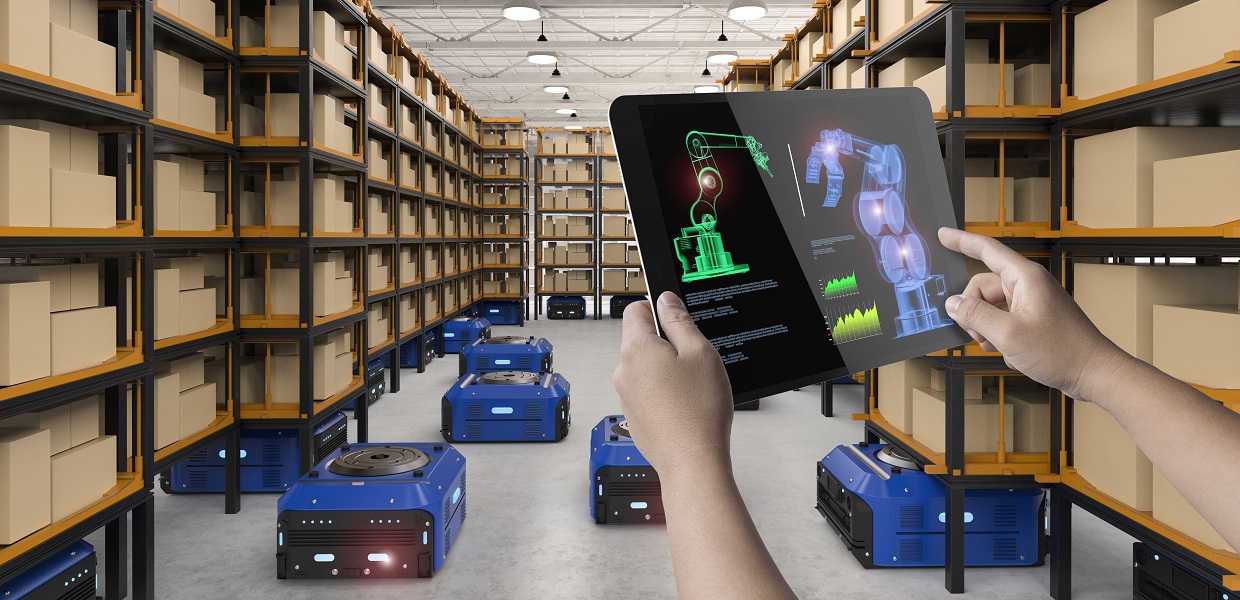
Automation often begins with warehouse management systems (WMS), allowing real-time inventory tracking and data control. Although the initial investment can be significant, the long-term benefits are clear: improved workflows, reduced human errors, and better scalability.
In the future, warehouse automation will be driven by robotics and artificial intelligence (AI), enabling more intelligent and flexible operations.
What is Warehouse Automation?
Warehouse automation refers to the use of technology to move, store, and manage goods with minimal human intervention.
The goal is not only to reduce manual labor but also to standardize operations and improve consistency.
For example, autonomous robots can transport goods while systems automatically update inventory data in real time.
Important: Automation is not limited to robots. Systems such as WMS, RFID, barcode scanning, and data platforms are equally essential.
How Does Warehouse Automation Work?
Warehouse automation is typically implemented through two main approaches:
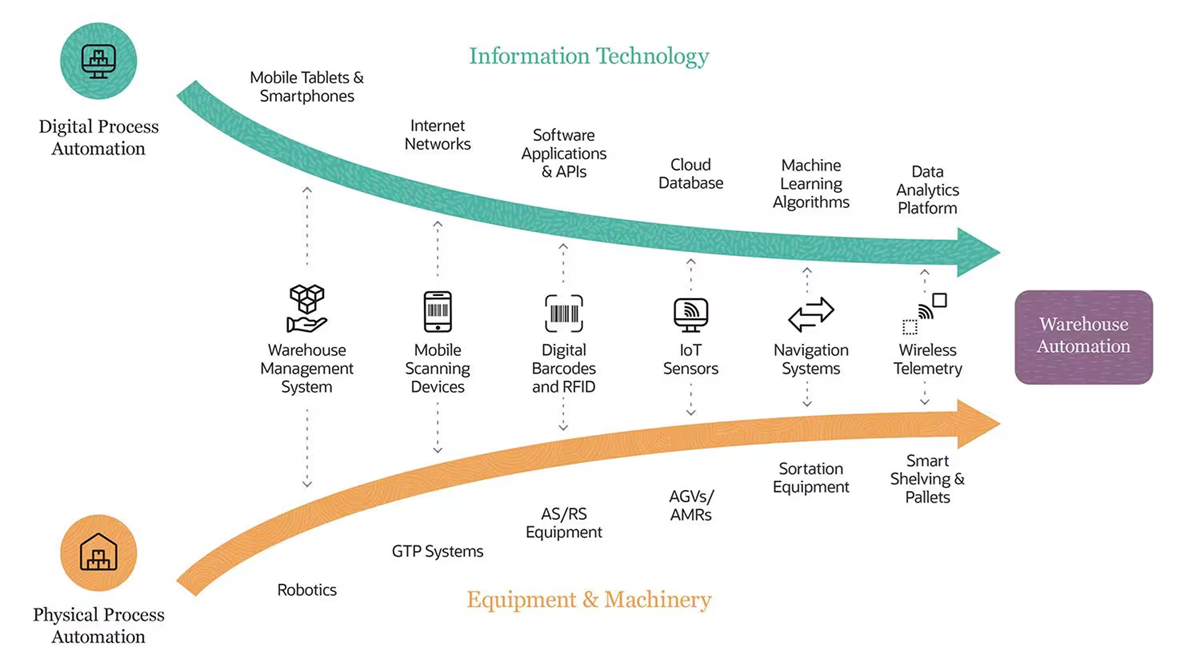
1. Digital Automation: Focuses on data and software systems.
Examples include WMS, ERP, RFID, sensors, and analytics platforms.
2. Physical Automation: Involves robots, conveyors, and automated handling systems.
This reduces travel time and increases operational speed.
Types of Warehouse Automation Systems
Depending on business scale and objectives, companies can adopt:
1. Basic Automation: Conveyors and semi-automated forklifts to reduce manual labor.
2. System Automation: Integration of WMS, robotics, and AI for end-to-end operations.
3. Mechanized Automation: Robots assist in transportation and handling.
4. Advanced Automation: AI, RTLS, and autonomous robot fleets enable near fully automated warehouses.
Common Warehouse Automation Technologies
| Technology |
Description |
| Goods-to-Person |
Brings items to workers to increase speed and accuracy. |
| AS/RS |
Automated storage and retrieval system. |
| AGV |
Automated guided vehicles following fixed paths. |
| AMR |
Autonomous mobile robots with flexible navigation. |
| Pick-to-Light |
Light-guided picking system for higher accuracy. |
| Voice Picking |
Voice-guided picking to improve speed and efficiency. |
| Sorting System |
Automated sorting using barcode or RFID systems. |
Benefits of Warehouse Automation
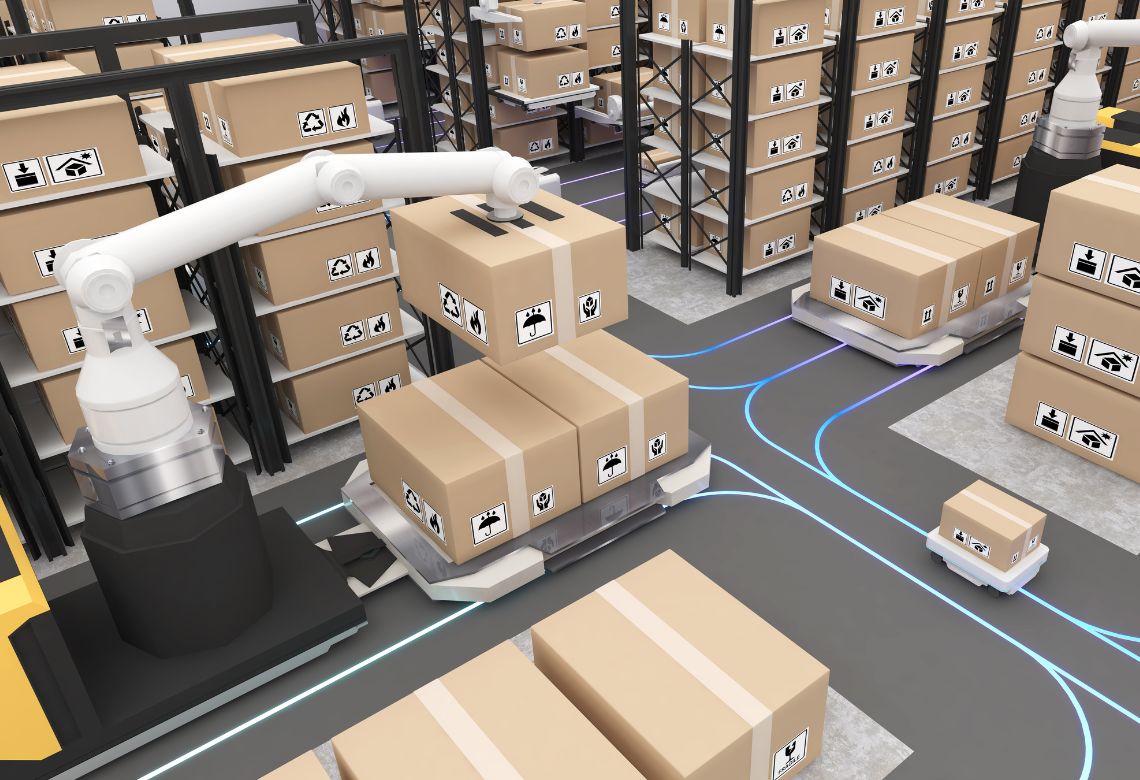
1. Increased productivity and reduced costs
- Faster order processing
- 24/7 operation
- Reduced labor costs
2. Space optimization
- Better vertical storage usage
- Reduced aisle space
3. Reduced errors
- Accurate tracking via RFID and barcodes
4. Real-time inventory accuracy
5. Improved customer experience
6. Better working conditions
7. Scalability
Challenges
1. High initial investment
2. System integration complexity
3. Workforce training
4. Operational risks
5. Workforce concerns
Solution: Implement in phases with a clear strategy.
Conclusion
Warehouse automation is no longer optional—it is essential.
Early adopters gain clear advantages in cost efficiency, operational performance, and scalability.
Contact PAN to explore the right automation solution for your business.
PAN TRADING JOINT STOCK COMPANY
📍 142 B2 Street, Sala Urban Area, An Khanh Ward, Ho Chi Minh City, Vietnam
📞 (+84) 28 3840 2222
🌐 https://panrobotics.vn
📩 contact@pantrading.vn